
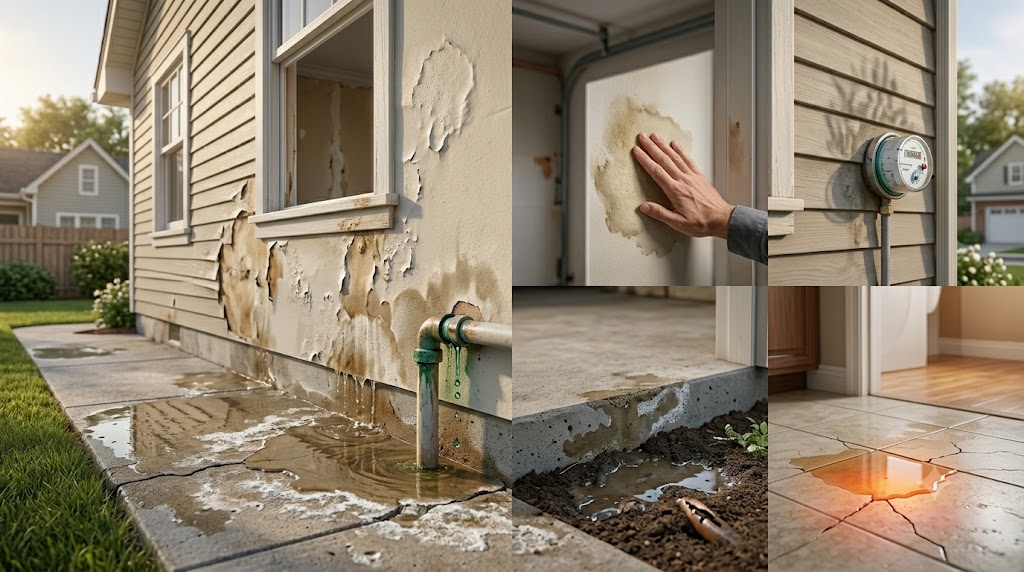
A slab leak is one of the most deceptive plumbing problems a homeowner can face. Unlike a burst pipe under your sink or a dripping faucet, a slab leak happens beneath your home’s concrete foundation — completely out of sight, and often out of mind, until the damage is already extensive. By the time most homeowners notice something is wrong, water may have been seeping into the foundation, soil, or flooring for weeks or even months.
The good news is that slab leaks rarely happen without warning. Your home is constantly giving you clues — subtle changes in your flooring, your water bill, your walls, and even the air in your home. Learning to recognize these underground pipe leak symptoms early can save you tens of thousands of dollars in structural repairs, mold remediation, and water damage restoration.
In this guide, the experts at United Plumbing walk you through the seven most important warning signs that mean it’s time for professional slab leak detection — and what to do once you spot them.
What Exactly Is a Slab Leak?
A slab leak occurs when a water or sewer pipe running beneath your home’s concrete foundation develops a crack, corrosion, or a full rupture. Because these pipes are buried in or under the slab, leaks aren’t always immediately visible. Instead, water slowly escapes into the surrounding soil and concrete, gradually working its way to the surface through cracks, expansion joints, or flooring seams.
Slab leaks are typically caused by:
- Corrosion of aging copper or galvanized pipes
- Poor original installation or shifting soil
- High water pressure that stresses pipe joints
- Abrasion from pipes rubbing against concrete or rebar
- Natural ground movement or seismic activity
Because the damage happens gradually and out of sight, recognizing hidden water leak signs early is the single most effective way to prevent a small problem from becoming a foundation-threatening emergency.
Why Early Detection Matters So Much
Water is patient, and it’s relentless. A slab leak that goes unnoticed doesn’t just waste water — it actively weakens your home’s structural integrity. Left untreated, a slab leak can lead to:
- Foundation cracking and shifting
- Mold and mildew growth beneath flooring
- Damaged subflooring, carpet, and drywall
- Termite and pest attraction due to moisture
- Significantly higher water bills
- Costly structural repairs that go far beyond simple plumbing fixes
This is why foundation leak detection isn’t something to put off. The earlier a leak is identified, the less invasive and less expensive the repair will be.
7 Warning Signs You Need Slab Leak Detection Right Away
1. An Unexplained Spike in Your Water Bill
One of the earliest and most reliable hidden water leak signs is a water bill that suddenly jumps without any change in your household’s usage habits. If you haven’t added new appliances, guests, or watering schedules, but your bill has climbed noticeably, an underground leak could be the reason. Even a small, steady leak can waste hundreds of gallons per month.
What to do: Compare your last 3-6 months of water bills. If usage patterns don’t match the increase, it’s time to call a professional for slab leak detection.
2. The Sound of Running Water When Everything Is Off
If you hear water running, hissing, or trickling somewhere in your home when every faucet, appliance, and irrigation system is completely off, this is a strong underground pipe leak symptom. Water under pressure escaping through a crack often creates a subtle but persistent sound, especially noticeable in quiet rooms or at night.
What to do: Turn off all water-using appliances and fixtures, then listen carefully near floors and walls. If you hear anything unusual, note the location and contact a plumber immediately.
3. Warm or Damp Spots on Your Flooring
If your home has a water heater line running through the slab, a leak in that line can cause warm spots on your flooring, especially over tile, hardwood, or thin carpet. Damp or unusually warm patches on the floor — even in areas that shouldn’t be near water fixtures — are a classic sign of a slab leak.
What to do: Walk barefoot across your flooring, particularly in central areas of the home. Any noticeable warmth or moisture where none should exist warrants a professional foundation leak detection inspection.
4. Cracks in Walls, Flooring, or the Foundation Itself
As water seeps into your foundation, the concrete can shift, swell, or weaken, resulting in visible cracks. Watch for:
- Cracks running along baseboards or drywall
- Tile or hardwood flooring that has buckled, cracked, or lifted
- Uneven or sloping floors in specific areas
- Cracks appearing on the exterior foundation walls
While minor cracking can happen naturally as homes settle, sudden or worsening cracks — especially paired with other symptoms on this list — are a serious red flag that shouldn’t be ignored.
5. Mold, Mildew, or Musty Odors Indoors
Moisture trapped beneath flooring or within wall cavities creates the perfect environment for mold and mildew growth. If you notice a persistent musty smell, especially in rooms without an obvious moisture source like a bathroom or laundry room, hidden water leak signs may be the underlying cause.
Mold isn’t just a cosmetic or odor issue — it can also pose real health risks, particularly for household members with allergies, asthma, or respiratory sensitivities.
What to do: If cleaning and ventilation don’t resolve the smell, a slab leak detection service can determine whether moisture beneath your flooring is the source.
6. Low Water Pressure Throughout the Home
A sudden or gradual drop in water pressure — especially if it affects multiple fixtures throughout the house — can indicate that water is escaping through a crack before it ever reaches your faucets. While low pressure can have several causes, when it’s paired with any of the other symptoms on this list, it’s a strong underground pipe leak symptom worth investigating.
What to do: Check pressure at multiple fixtures. If the drop is widespread rather than isolated to a single faucet, schedule a professional inspection.
7. The Sound or Sight of Water Pooling Where It Shouldn’t
If you notice unexplained puddles on your floor, damp patches on carpet, or water pooling near the foundation’s exterior — particularly in dry weather — this is one of the more obvious signs that water is escaping somewhere it shouldn’t be. By the time water is visibly pooling, the leak has often been active for quite some time.
What to do: Don’t wait for the puddle to reappear. Contact a plumber for immediate foundation leak detection to locate the source before damage spreads further.
How Professional Slab Leak Detection Works
Because slab leaks are hidden beneath concrete, guesswork isn’t a reliable strategy. Professional plumbers use specialized, non-invasive technology to pinpoint the exact location of a leak without unnecessary demolition. At United Plumbing, our slab leak detection process typically includes:
- Initial Assessment — Reviewing symptoms, water bill history, and any visible signs of damage.
- Electronic Leak Detection — Using acoustic listening devices to detect the sound of water escaping under pressure.
- Thermal Imaging — Identifying temperature differences in flooring that can reveal hot water line leaks.
- Video Pipe Inspection — Running a camera through accessible pipe sections to visually confirm cracks or corrosion.
- Pressure Testing — Isolating sections of the plumbing system to narrow down the exact leak location.
This combination of tools allows our technicians to identify the precise location of the leak with minimal disruption to your flooring or foundation, saving you time and repair costs.
Slab Leak Repair Options
Once a leak has been located, several repair methods may be recommended depending on the severity and location of the damage:
- Spot Repair — Accessing the specific damaged section of pipe through a small, targeted opening in the slab.
- Pipe Re-Routing — Redirecting the water line through walls or ceilings instead of under the slab, avoiding the need to break through concrete.
- Pipe Relining — Inserting a new interior lining into the existing pipe to seal cracks without full replacement.
- Full Repiping — In cases of widespread corrosion, replacing the entire plumbing system may be the most cost-effective long-term solution.
A qualified plumber will walk you through the pros, cons, and costs of each option based on your home’s specific situation.
How to Prevent Future Slab Leaks
While not all slab leaks are preventable, especially those caused by natural ground shifting, there are steps homeowners can take to reduce risk:
- Monitor water pressure — Excessively high water pressure stresses pipes over time. A pressure regulator can help maintain safe levels.
- Schedule regular plumbing inspections — Catching corrosion or wear early can prevent a small issue from becoming a major leak.
- Watch your water bill — Make it a habit to review your bill monthly for unexplained spikes.
- Address soil drainage issues — Poor drainage around your foundation can accelerate pipe corrosion and soil shifting.
- Consider repiping aging homes — Homes with original galvanized or older copper piping are at higher risk and may benefit from proactive replacement.
Why Choose United Plumbing for Slab Leak Detection
Slab leaks require precision, experience, and the right technology to resolve without unnecessary damage to your home. At United Plumbing, our licensed technicians specialize in non-invasive foundation leak detection using industry-leading equipment, so we can find and fix leaks quickly and accurately.
When you choose United Plumbing, you can expect:
- Advanced acoustic and thermal leak detection technology
- Transparent, upfront pricing with no hidden fees
- Minimally invasive repair techniques whenever possible
- Licensed, experienced plumbing technicians
- Fast emergency response for active leaks
We understand how stressful it can be to discover hidden water leak signs in your home, which is why we prioritize clear communication and efficient service from the moment you call.
Final Thoughts: Don’t Ignore the Warning Signs
Slab leaks rarely happen without warning — your home is almost always sending signals long before serious damage occurs. Whether it’s a spike in your water bill, a mysterious warm spot on the floor, or the faint sound of running water, these underground pipe leak symptoms deserve immediate attention.
Ignoring these signs doesn’t make the problem go away; it only gives water more time to damage your foundation, flooring, and walls. If you’ve noticed any of the seven warning signs covered in this guide, don’t wait for the situation to worsen.
Suspect a slab leak? Contact United Plumbing today to schedule professional slab leak detection and protect your home before minor damage becomes a major repair.
Frequently Asked Questions
How much does slab leak detection cost?
Costs vary based on home size and the complexity of the leak, but professional detection is almost always more affordable than the cost of ignoring a leak until it causes structural damage.
Can a slab leak fix itself?
No. Slab leaks only worsen over time as water pressure continues to erode the crack or corrosion point. Professional repair is always necessary.
How long does slab leak detection take?
Most detection appointments take one to two hours, depending on home size and the accessibility of plumbing lines.
Is slab leak repair covered by homeowners insurance?
Coverage varies by policy and cause of the leak. It’s best to check with your insurance provider, though many policies cover resulting water damage even if the leak repair itself isn’t covered.