
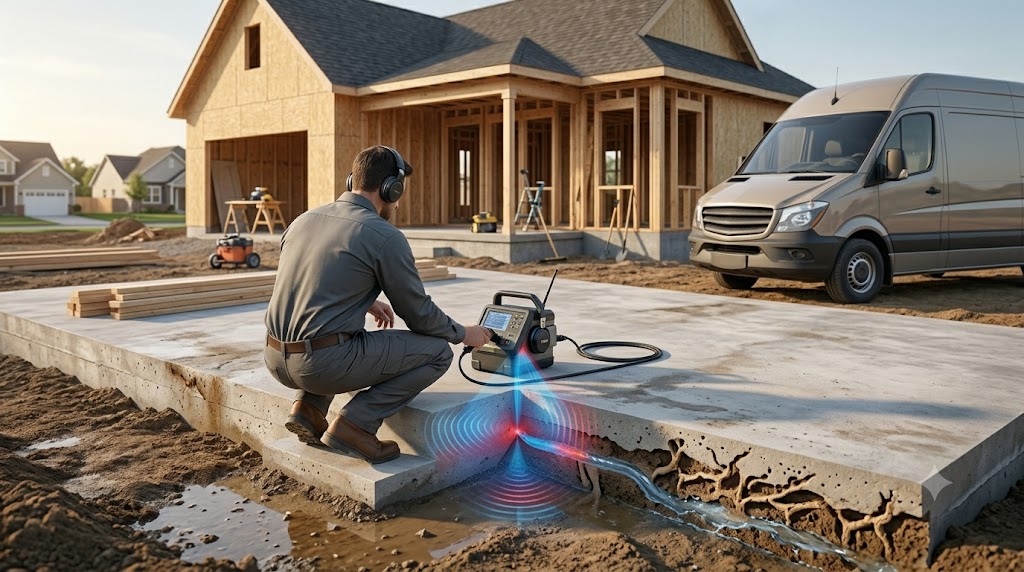
A slab leak might be one of the most underestimated threats to a home’s structural integrity. Unlike a burst pipe under a sink or a dripping faucet, a slab leak happens beneath your home’s concrete foundation, out of sight and often out of mind — until the damage becomes severe and expensive. By the time most homeowners notice a problem, water may have already been seeping into the foundation for weeks or even months.
This is exactly why slab leak detection has become such an essential service for homeowners who want to protect their property investment. Catching a leak early doesn’t just save you from a soggy carpet or a higher water bill — it can be the difference between a simple repair and a five-figure foundation repair bill. In this guide, United Plumbing breaks down how slab leak detection works, why it matters for foundation water damage prevention, and what to expect from professional early leak detection services.
What Is a Slab Leak?
A slab leak occurs when a water line running underneath or through a home’s concrete foundation begins to leak. Homes built on a concrete slab foundation typically have plumbing pipes either embedded within the slab itself or running just beneath it. Over time, these pipes can corrode, shift, or crack due to soil movement, poor installation, high water pressure, or simple age-related wear.
Because these leaks occur beneath the concrete, they’re not something you can see directly. Instead, the water finds its way out through cracks in the foundation, up through flooring, or into surrounding soil — often causing significant damage long before it becomes visible.
Why Slab Leaks Are So Dangerous for Your Foundation
Concrete foundations are designed to bear enormous structural loads, but they are not designed to handle constant water exposure. When a slab leak goes undetected, several things can happen:
- Soil erosion beneath the foundation, which can cause uneven settling
- Cracks in the concrete slab, which weaken structural support
- Mold and mildew growth within walls, flooring, and insulation
- Damage to flooring materials, including hardwood, tile, and carpet
- Increased foundation movement, leading to cracked walls, sticking doors, and uneven floors
The longer a slab leak persists, the more extensive — and expensive — the resulting damage becomes. This is why foundation water damage prevention starts with catching leaks as early as possible, before they compromise the structural integrity of your home.
Common Signs You May Have a Slab Leak
Because slab leaks are hidden beneath your floors, recognizing the warning signs is critical. Here are the most common indicators homeowners should watch for:
1. Unexplained Increase in Water Bills
If your water usage habits haven’t changed but your bill has spiked significantly, a hidden leak could be the cause. Slab leaks often go unnoticed because there’s no visible water anywhere, but your meter tells the real story.
2. Warm Spots on the Floor
If hot water lines are leaking, you may notice warm or hot patches on your flooring, particularly on tile, laminate, or concrete surfaces. This is one of the more distinctive signs of a slab leak.
3. The Sound of Running Water
If you hear water running or a hissing sound beneath your floors when all fixtures are turned off, this is a strong indicator of a leak somewhere in your plumbing system, potentially beneath the slab.
4. Damp or Wet Carpet and Flooring
Unexplained dampness, especially in areas far from bathrooms or kitchens, often points to water traveling up from below the foundation.
5. Mold or Mildew Odors
A musty smell that won’t go away, especially near baseboards or flooring, can indicate moisture buildup caused by a slab leak.
6. Cracks in Walls or Flooring
As water erodes the soil supporting your foundation, the slab can shift, leading to visible cracks in drywall, tile, or even the foundation itself.
7. Low Water Pressure
A drop in water pressure throughout the home can indicate that water is escaping through a leak rather than reaching your fixtures at full strength.
8. Mold Growth Under Flooring
Pulling up damaged carpet or flooring may reveal mold growth underneath — a clear sign that moisture has been present for an extended period.
If you notice any combination of these symptoms, scheduling professional slab leak detection should be a top priority.
How Professional Slab Leak Detection Works
Modern slab leak detection relies on non-invasive technology that allows plumbers to pinpoint a leak’s exact location without tearing up your entire foundation. At United Plumbing, our early leak detection services include:
Acoustic Leak Detection
Specialized listening equipment amplifies the sound of water escaping from a pressurized line, allowing technicians to trace the leak’s location by sound alone.
Infrared Thermal Imaging
Thermal cameras detect temperature variations in flooring caused by water leaking from hot or cold water lines, helping technicians visualize the leak’s path without any demolition.
Video Pipe Inspection
A small camera is threaded through accessible plumbing lines to visually inspect pipe conditions, identify cracks, and confirm the exact source of the leak.
Pressure Testing
By isolating sections of the plumbing system and monitoring pressure changes, technicians can determine which line is compromised, narrowing down the leak’s location before any excavation begins.
These tools allow for precise, targeted detection, meaning repairs can be made with minimal disruption to floors, walls, and landscaping.
The Foundation Water Damage Prevention Process
Once a slab leak is detected, addressing it quickly is essential to prevent further foundation water damage. The typical process includes:
- Leak Location Confirmation — Using detection tools to pinpoint the exact source of the leak.
- Damage Assessment — Evaluating how much water has already affected the foundation, flooring, and surrounding structures.
- Repair Method Selection — Depending on the severity, options may include spot repair, pipe rerouting, or full repiping.
- Repair Execution — Skilled technicians access the leak with minimal disruption, often through small, targeted openings rather than large-scale demolition.
- Post-Repair Testing — Ensuring water pressure and flow are fully restored and no additional leaks are present.
- Foundation and Flooring Restoration — Repairing any concrete, flooring, or structural damage caused by the leak.
This proactive approach not only stops the immediate leak but also protects your home from the long-term structural issues associated with prolonged water exposure.
The Cost of Ignoring a Slab Leak
Homeowners sometimes delay addressing a suspected slab leak due to the perceived cost or inconvenience of repairs. However, ignoring the problem almost always leads to significantly higher expenses down the road, including:
- Structural foundation repairs, which can cost tens of thousands of dollars
- Mold remediation, especially if moisture has spread into walls or insulation
- Flooring replacement, particularly for hardwood or laminate materials
- Increased water bills from ongoing, undetected water loss
- Reduced property value due to visible foundation damage
By comparison, early leak detection services typically cost a fraction of what extensive foundation repairs require, making early intervention one of the smartest financial decisions a homeowner can make.
Why Early Detection Is the Key to Foundation Protection
The core principle behind effective foundation water damage prevention is simple: the sooner a leak is found, the less damage it can cause. Waiting even a few extra weeks can allow water to spread further into the soil beneath your home, increasing the risk of settling, cracking, and structural instability.
Routine plumbing inspections, especially for older homes or properties with a history of plumbing issues, can catch small leaks before they escalate into major foundation problems. Many plumbing professionals, including United Plumbing, recommend scheduling a slab leak inspection if your home is more than 15-20 years old, has experienced previous plumbing issues, or shows any of the warning signs mentioned earlier.
How Often Should You Schedule Slab Leak Detection?
While not every home needs constant monitoring, certain situations call for more frequent checks:
- Homes older than 20 years with original plumbing still in place
- Properties with a history of plumbing repairs or leaks
- Homes in areas with shifting or expansive soil
- After any noticeable increase in water bills
- Before purchasing a home, as part of a thorough inspection process
For most homeowners, an annual plumbing checkup that includes leak detection screening is a reasonable baseline for peace of mind.
Why Choose United Plumbing for Slab Leak Detection
At United Plumbing, we understand that a hidden leak isn’t just a plumbing inconvenience — it’s a potential threat to your home’s entire structural foundation. Our team is equipped with the latest detection technology and years of hands-on experience identifying and repairing slab leaks with minimal disruption to your property.
When you choose United Plumbing, you get:
- Advanced acoustic, thermal, and video detection technology
- Transparent, accurate diagnosis before any repair work begins
- Skilled technicians experienced in minimally invasive repair techniques
- Fast response times to limit ongoing foundation water damage
- Honest recommendations tailored to your home’s specific needs
We prioritize early leak detection services because we know that a small investment now can save homeowners from devastating structural repairs later.
Final Thoughts: Don’t Let a Hidden Leak Become a Foundation Crisis
Slab leaks are sneaky by nature — hidden beneath your floors, often silent until the damage becomes severe. But by recognizing early warning signs and prioritizing regular inspections, you can catch these leaks before they threaten your home’s foundation.
If you’ve noticed unexplained water bill increases, warm spots on your floor, or any of the other signs discussed in this guide, don’t wait. Contact United Plumbing today to schedule professional slab leak detection and take a proactive step toward protecting your home for years to come.
Frequently Asked Questions
How do I know if I have a slab leak?
Common signs include unexplained increases in water bills, warm spots on flooring, the sound of running water beneath floors, and unexplained dampness or mold odors.
Is slab leak detection invasive?
No. Modern methods like acoustic detection, infrared imaging, and video pipe inspection allow technicians to locate leaks without extensive demolition.
How much does slab leak repair typically cost?
Costs vary depending on the leak’s location and severity, but early detection generally results in significantly lower repair costs compared to delayed foundation repairs.
Can a slab leak really damage my home’s foundation?
Yes. Prolonged water exposure can erode the soil supporting your foundation, leading to cracks, uneven settling, and long-term structural damage if left untreated.