
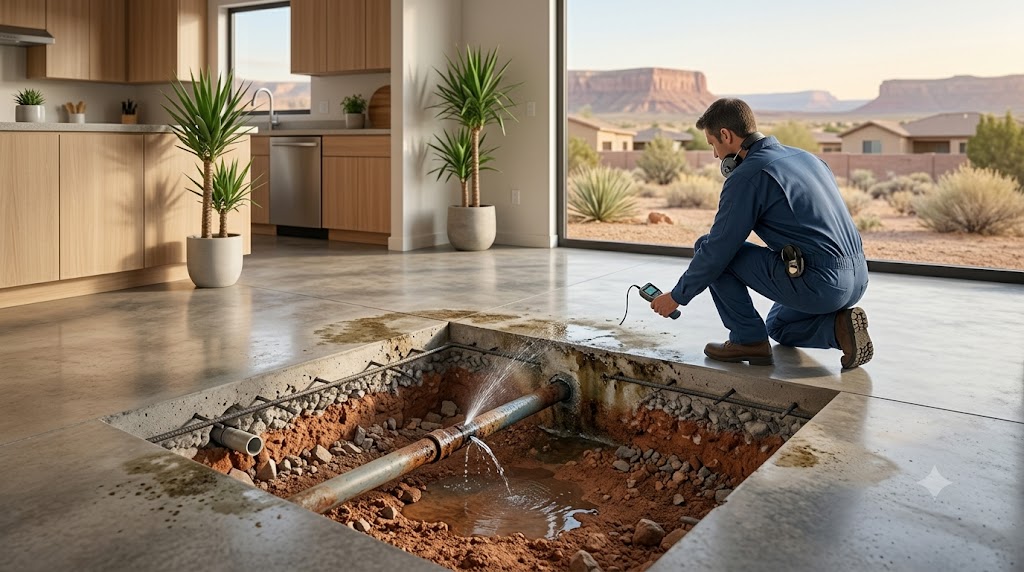
If you own a home in Rio Rancho, you already know the unique challenges that come with New Mexico’s clay-heavy soil, shifting temperatures, and seasonal ground movement. What many homeowners don’t realize is that these same conditions make homes in this area especially vulnerable to a hidden and often costly problem: slab leaks.
A slab leak occurs when a water line running beneath your home’s concrete foundation develops a crack, corrosion point, or full break. Unlike a leaky faucet or a burst pipe under the sink, slab leaks happen out of sight — often for weeks or months — before homeowners notice any signs. By the time symptoms appear, the damage can already extend into the foundation, flooring, and even the structural integrity of the home.
This is exactly why professional slab leak detection matters so much for Rio Rancho homeowners. At United Plumbing, we’ve seen firsthand how early detection using advanced plumbing diagnostics can save homeowners thousands of dollars in repair costs — and why relying on licensed leak detection specialists, rather than guesswork, is the only reliable way to protect your property.
What Exactly Is a Slab Leak?
Most homes built on a concrete slab foundation have water and sewer lines running either through or beneath that slab. Over time, these pipes can develop leaks due to:
- Soil shifting or settling beneath the foundation
- Corrosion from certain types of copper or galvanized piping
- High water pressure putting stress on pipe joints
- Abrasion from pipes rubbing against concrete or gravel
- Poor original installation or outdated materials
When a leak develops in one of these lines, water doesn’t just disappear — it seeps into the surrounding soil, concrete, and structural elements of your home. Depending on the location of the leak, this can lead to foundation cracks, mold growth, warped flooring, and even damage to walls.
Why Rio Rancho Homes Are Particularly at Risk
Rio Rancho sits in an area with expansive clay soils that expand and contract significantly with changes in moisture and temperature. This constant ground movement puts extra stress on underground plumbing, increasing the likelihood of pipe stress fractures and joint separations over time.
Additionally, many homes in the area were built decades ago using galvanized steel or older copper piping, both of which are more prone to corrosion compared to modern materials. Combine aging infrastructure with shifting soil, and it’s easy to see why slab leaks are a more common concern here than in many other regions.
The Hidden Danger: Why Slab Leaks Go Unnoticed
Unlike visible plumbing issues, slab leaks are notoriously difficult to detect without the right tools and expertise. Water can travel significant distances underground before surfacing, meaning the location where you notice a problem — a damp spot on the carpet, a crack in the wall — may be far from the actual source of the leak.
This is where many homeowners run into trouble. Attempting a DIY approach or hiring an inexperienced contractor without proper diagnostic equipment often results in unnecessary demolition, misdiagnosed problems, or repairs that don’t actually fix the root cause. Professional residential water leak repair services rely on precise diagnostics to locate the exact source before any repair work begins, preventing costly guesswork.
Warning Signs You May Have a Slab Leak
Recognizing the early warning signs of a slab leak can make the difference between a manageable repair and a major renovation project. Watch for:
1. Unexplained Increase in Water Bills
If your water usage habits haven’t changed but your bill has spiked significantly, an underground leak could be the cause. Slab leaks often waste hundreds of gallons of water before ever becoming visible.
2. Warm Spots on the Floor
If your home has a hot water line running through the slab, a leak in that line can create noticeably warm areas on your flooring, especially on tile or concrete surfaces.
3. The Sound of Running Water
Hearing water running or dripping when all fixtures are turned off is a strong indicator of a hidden leak somewhere in your plumbing system, potentially beneath the slab.
4. Cracks in Walls, Flooring, or the Foundation
As water erodes the soil beneath your slab or seeps into concrete, it can cause visible cracking in floors, walls, or even the foundation itself.
5. Damp Carpet or Flooring
Unexplained damp spots, warping, or discoloration in flooring — particularly in areas without an obvious external cause like a spill — often point to moisture rising from below.
6. Mold or Mildew Odor
Persistent musty smells, especially in ground-level rooms, can indicate moisture buildup from a slab leak feeding mold growth beneath or around your flooring.
7. Reduced Water Pressure
A drop in water pressure throughout your home can indicate that water is escaping through a break in the line before it reaches your fixtures.
If you notice any combination of these signs, it’s time to contact licensed leak detection specialists rather than waiting to see if the problem resolves on its own — because slab leaks never fix themselves, and they only get worse with time.
How Advanced Plumbing Diagnostics Identify Slab Leaks
Modern leak detection has moved far beyond the days of guesswork and exploratory demolition. At United Plumbing, our technicians use advanced plumbing diagnostics designed specifically to pinpoint the exact location of a slab leak without unnecessary damage to your property. These methods include:
Acoustic Leak Detection
Specialized listening equipment amplifies the sound of water escaping from a pressurized line, allowing technicians to trace the leak’s path even when it’s several feet underground.
Electronic Leak Detection
This method uses electromagnetic sensors to detect the presence of moisture and changes in soil density caused by escaping water, helping to narrow down the leak’s exact location.
Video Pipe Inspection
A small waterproof camera is fed through accessible plumbing lines to visually inspect the interior condition of pipes, revealing cracks, corrosion, or blockages contributing to the leak.
Pressure Testing
By isolating sections of the plumbing system and monitoring pressure changes, technicians can determine which line is compromised without needing to inspect the entire system physically.
Thermal Imaging
Infrared cameras detect temperature differences in flooring and walls, which can reveal the path of a hot water line leak even before any visible damage appears.
These tools allow licensed leak detection specialists to identify the precise location and severity of a leak, minimizing the need for invasive slab penetration and reducing overall repair costs.
Why Choosing Licensed Leak Detection Specialists Matters
Not all plumbing companies have the equipment or training necessary to properly diagnose slab leaks. Choosing licensed leak detection specialists ensures:
- Accurate Diagnosis — Proper training and equipment mean the actual source of the leak is identified, not just a symptom.
- Minimally Invasive Repairs — Precise location data reduces the amount of concrete or flooring that needs to be disturbed.
- Code Compliance — Licensed professionals ensure any repair work meets local plumbing codes and standards.
- Long-Term Reliability — Proper repairs address the root cause, reducing the likelihood of repeat leaks in the same area.
- Insurance Documentation — Detailed diagnostic reports from licensed professionals can support insurance claims related to water damage.
Attempting to cut corners with unlicensed or inexperienced contractors can lead to misdiagnosed leaks, incomplete repairs, and even code violations that create problems when selling your home down the road.
Repair Options for Slab Leaks
Once a leak has been accurately located, several residential water leak repair services may be recommended depending on the severity and location of the damage:
Spot Repair
For isolated leaks, technicians can access the specific damaged section of pipe through targeted excavation, repairing or replacing just that portion of the line.
Pipe Re-Routing
In some cases, it’s more practical to reroute the water line around the damaged section entirely, avoiding the need to break through the slab at all.
Pipe Lining (Trenchless Repair)
This method involves inserting a flexible liner into the existing pipe, creating a new interior surface without the need for extensive excavation or slab removal.
Full Repiping
For homes with widespread corrosion or multiple leak points, a full repiping project may be the most cost-effective long-term solution, replacing old, failure-prone materials with modern, durable piping.
Your chosen repair method will depend on factors like the age of your plumbing system, the extent of existing damage, and your long-term plans for the property. A qualified technician will walk you through the pros and cons of each option based on your specific diagnostic results.
The Cost of Waiting
Homeowners sometimes delay addressing a suspected slab leak due to concerns about repair costs, but waiting almost always leads to more expensive outcomes. Prolonged leaks can result in:
- Structural foundation damage requiring major repairs
- Extensive mold growth requiring remediation
- Damaged flooring, drywall, and cabinetry
- Higher water bills accumulating over time
- Reduced property value due to unresolved foundation issues
What might start as a manageable repair can quickly escalate into a five-figure renovation project if left unaddressed. Early intervention through professional slab leak detection is almost always the more affordable path.
How United Plumbing Helps Rio Rancho Homeowners
At United Plumbing, we specialize in identifying and resolving slab leaks with precision and care. Our approach combines:
- Licensed leak detection specialists with years of local experience
- State-of-the-art advanced plumbing diagnostics equipment
- Transparent communication throughout the diagnostic and repair process
- Minimally invasive repair techniques whenever possible
- Comprehensive residential water leak repair services tailored to Rio Rancho’s unique soil and climate conditions
We understand the specific plumbing challenges that come with homes in this region, and we tailor our diagnostic approach accordingly, rather than applying a generic, one-size-fits-all method.
Final Thoughts: Don’t Ignore the Warning Signs
Slab leaks are one of the most deceptive plumbing problems a homeowner can face, precisely because they develop out of sight. For Rio Rancho residents, the combination of shifting clay soils and aging plumbing infrastructure makes proactive detection even more important.
If you’ve noticed any warning signs — rising water bills, warm spots on your floor, unexplained cracks, or musty odors — don’t wait for the problem to worsen. Reach out to United Plumbing for a thorough, professional assessment using advanced plumbing diagnostics designed to catch the problem early and protect your home’s foundation for years to come.
Suspect a slab leak? Contact United Plumbing today to schedule an inspection with our licensed leak detection specialists and get ahead of costly water damage before it starts.
Frequently Asked Questions
How much does slab leak detection cost?
Costs vary based on home size and the complexity of the diagnostic process. United Plumbing provides upfront estimates before any work begins.
Can a slab leak be repaired without breaking the foundation?
In many cases, yes. Trenchless methods like pipe lining and re-routing can resolve leaks with minimal disruption to your slab.
How long does slab leak repair take?
Simple spot repairs may take a single day, while more extensive repiping projects can take several days depending on the scope of work.
Will homeowners insurance cover slab leak repairs?
Coverage varies by policy and the cause of the leak. Documentation from a licensed leak detection specialist can help support your claim.