
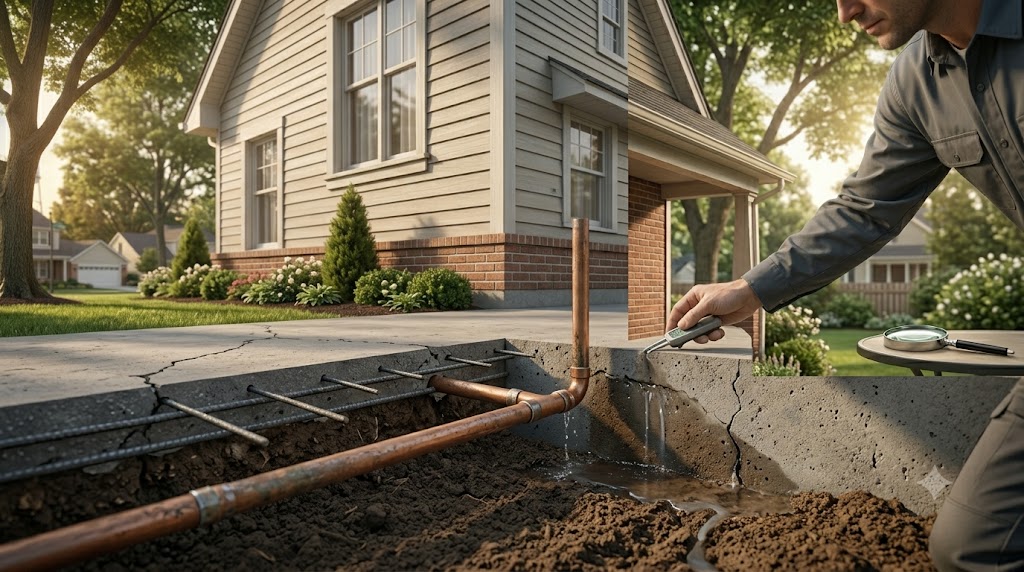
Few plumbing problems strike fear into homeowners quite like a slab leak. Hidden beneath your home’s concrete foundation, these leaks can go unnoticed for months, silently causing structural damage, mold growth, and skyrocketing water bills before anyone realizes what’s happening. By the time a slab leak becomes visible — through cracked flooring, warped carpet, or pooling water — the damage underneath may already be extensive.
The good news is that slab leaks don’t have to catch you off guard. Understanding what causes them and recognizing the early warning signs can mean the difference between a simple repair and a full foundation overhaul. In this guide, United Plumbing walks you through the most common causes of slab leaks, why damaged underground water pipes are often to blame, and how professional detection and plumbing leak prevention solutions can save your home from serious harm.
What Exactly Is a Slab Leak?
A slab leak occurs when a water or sewer line running beneath your home’s concrete foundation develops a crack, hole, or break, allowing water to escape into the soil or up through the slab itself. Because these pipes are literally encased in or running beneath concrete, any leak is difficult to spot and even harder to reach without specialized tools and expertise.
Slab leaks are particularly common in homes built on a concrete slab foundation rather than a raised foundation with a crawl space, since the plumbing lines run directly beneath the concrete rather than being easily accessible. Over time, several factors can cause these buried pipes to fail, leading to water damage that spreads far beyond the original leak point.
Common Causes of Slab Leaks
1. Pipe Corrosion and Water Leaks
One of the leading causes of slab leaks is simple age-related deterioration. Copper and galvanized steel pipes, common in homes built several decades ago, are especially vulnerable to corrosion over time. As minerals in the water react with the metal, pipe walls gradually thin out, eventually forming pinhole leaks. Once corrosion starts, it tends to spread, and pipe corrosion and water leaks often appear in multiple locations along the same pipe run rather than as an isolated incident.
Homes with acidic or highly mineralized water are at even greater risk, as the water chemistry accelerates the corrosion process. Without intervention, what starts as a small leak can quickly develop into significant structural water damage.
2. Poor Quality Pipe Installation
Not all plumbing installations are created equal. Pipes installed with improper fittings, insufficient support, or subpar materials are more prone to premature failure. Builders who cut corners during construction — whether by using low-grade materials or rushing the installation process — leave homeowners vulnerable to slab leaks years down the road, often well before the pipes should naturally need replacement.
3. Soil Shifting and Ground Movement
The ground beneath your home is never perfectly static. Seasonal temperature changes, moisture fluctuations, and natural settling can cause soil to expand, contract, and shift over time. This movement puts pressure on the pipes running through and beneath the foundation, leading to bending, misalignment, and eventually cracks or breaks. Homes in regions with expansive clay soil are particularly susceptible to this type of slab leak, since the soil swells significantly when wet and shrinks when dry.
4. High Water Pressure
While strong water pressure might feel great in the shower, excessively high pressure puts continuous stress on your entire plumbing system, including the pipes hidden beneath your slab. Over time, this added strain can weaken joints and pipe walls, making them more susceptible to bursting or developing leaks. Homes without a properly functioning pressure regulator are at increased risk of this issue.
5. Abrasion from Pipe Movement
Pipes aren’t meant to stay perfectly still. Water flow, temperature changes, and ground vibrations can cause slight pipe movement over time. When pipes rub against concrete, rebar, or other pipes, the friction gradually wears down the pipe’s exterior. This abrasion weakens the pipe at the contact point, eventually creating a leak, even in pipes that were installed correctly and are otherwise in good condition.
6. Chemical Reactions in the Soil
The soil surrounding your foundation isn’t always plumbing-friendly. Certain soil compositions contain chemicals or minerals that react with pipe materials, accelerating corrosion from the outside in. This is especially problematic for damaged underground water pipes that already have minor surface imperfections, as the surrounding soil chemistry can speed up deterioration significantly.
7. Manufacturing Defects
While less common, some slab leaks stem from defective pipes straight from the manufacturer. Thin walls, improper alloy composition, or manufacturing flaws can cause certain pipe sections to fail well before their expected lifespan, regardless of installation quality or water conditions.
Warning Signs of a Slab Leak
Because slab leaks develop underground and out of sight, homeowners need to rely on secondary indicators to catch problems early. Watch for these common warning signs:
- Unexplained increase in water bills without any change in usage habits
- The sound of running water when all fixtures are off
- Warm spots on the floor, particularly if the leak involves a hot water line
- Damp or warped flooring, including buckling hardwood or lifting tile
- Mold or mildew smell without any visible source
- Reduced water pressure throughout the home
- Cracks in walls or the foundation itself
- Sounds of water running beneath the floor even when fixtures are turned off
- Pooling water around the exterior of the foundation with no clear external cause
If you notice any combination of these signs, it’s important to act quickly. The longer a slab leak goes undetected, the more extensive — and expensive — the resulting damage tends to become.
Why Early Detection Matters So Much
Slab leaks are unique among plumbing problems because the damage isn’t limited to the leak itself. Water escaping beneath your foundation can:
- Erode soil support beneath the slab, leading to foundation settling or cracking
- Seep upward through the concrete, damaging flooring, carpet, and subflooring
- Create the ideal environment for mold and mildew growth, which poses health risks
- Cause termite and pest issues, since many pests are drawn to persistent moisture
- Weaken the structural integrity of the home over time if left unaddressed
Early detection stops this chain reaction before it starts. Catching a slab leak in its earliest stages, before major water damage or foundation issues develop, is one of the most effective forms of plumbing leak prevention available to homeowners.
How Professional Slab Leak Detection Works
Modern plumbing technology has made slab leak detection far more precise and far less invasive than the outdated method of jackhammering through concrete to search for a leak. At United Plumbing, our technicians use a combination of advanced tools and techniques, including:
Acoustic Leak Detection
Specialized listening equipment amplifies the sound of water escaping from a pressurized pipe, allowing technicians to pinpoint the leak’s exact location without any guesswork.
Infrared Thermal Imaging
Thermal cameras detect temperature variations in flooring and walls, often revealing the path of a hot water leak or areas of unusual moisture buildup beneath the surface.
Video Pipe Inspection
Small, waterproof cameras can be threaded through accessible plumbing lines to visually inspect pipe conditions, identifying corrosion, cracks, or blockages contributing to the leak.
Pressure Testing
By isolating sections of the plumbing system and monitoring pressure changes, technicians can determine whether a leak exists and narrow down its general location before more precise detection methods are used.
This combination of tools allows our team to accurately locate slab leaks with minimal disruption to your home, avoiding unnecessary demolition and reducing repair costs significantly.
Slab Leak Repair Options
Once a leak has been detected and confirmed, several repair approaches may be recommended depending on the severity and location of the damage:
- Spot Repair — Accessing the specific leak location through a small section of concrete for a direct, targeted fix.
- Pipe Re-Routing — Redirecting the water line through walls or ceilings instead of beneath the slab, avoiding the damaged section entirely.
- Epoxy Pipe Lining — Coating the interior of the pipe with a durable epoxy resin to seal minor leaks and prevent further corrosion without full pipe replacement.
- Full Repiping — In cases of widespread corrosion or multiple leak points, replacing the entire plumbing system may be the most cost-effective long-term solution.
Your United Plumbing technician will walk you through the pros and cons of each option based on your home’s specific situation, helping you choose the solution that best balances cost, disruption, and long-term reliability.
Plumbing Leak Prevention Solutions Worth Considering
While not every slab leak can be prevented entirely, several proactive plumbing leak prevention solutions can significantly reduce your risk:
- Water Pressure Regulators — Installing a pressure-reducing valve protects your entire plumbing system from the excess strain of high water pressure.
- Routine Plumbing Inspections — Annual inspections can catch corrosion, minor leaks, or pipe wear before they escalate into slab leaks.
- Water Softening Systems — For homes with hard water, a water softener reduces mineral buildup that accelerates pipe corrosion.
- Pipe Insulation — Insulating pipes helps reduce temperature-related expansion and contraction, minimizing wear over time.
- Repiping Aging Systems — Homes with plumbing systems more than 40-50 years old may benefit from proactive repiping before corrosion leads to failure.
- Leak Detection Systems — Smart water sensors can alert homeowners to unusual water flow or moisture, allowing for immediate action.
Investing in prevention is almost always less expensive than dealing with the aftermath of an undetected slab leak, both in terms of repair costs and the disruption to your daily life.
Why Choose United Plumbing for Slab Leak Detection and Repair
Slab leaks require a level of expertise and specialized equipment that goes beyond standard plumbing repairs. At United Plumbing, our technicians are trained specifically in non-invasive leak detection methods, allowing us to accurately locate damaged underground water pipes without unnecessary demolition or guesswork.
When you choose United Plumbing, you benefit from:
- State-of-the-art acoustic and thermal detection technology
- Transparent, upfront pricing with no hidden fees
- Experienced technicians who specialize in slab leak repair
- Fast response times to minimize ongoing water damage
- Long-term plumbing leak prevention guidance tailored to your home
We understand how stressful discovering a slab leak can be, which is why our goal is always to resolve the issue as quickly, accurately, and affordably as possible.
Final Thoughts: Don’t Let a Hidden Leak Become a Major Problem
Slab leaks are sneaky by nature, developing silently beneath your home until the damage becomes impossible to ignore. Whether caused by pipe corrosion and water leaks, soil movement, high water pressure, or installation issues, the underlying problem only gets worse with time.
Recognizing the early warning signs and scheduling professional detection at the first sign of trouble is the single best thing you can do to protect your home’s foundation, your health, and your budget. If you suspect a slab leak or simply want peace of mind, United Plumbing is ready to help with accurate detection and lasting repair solutions.
Concerned about a possible slab leak? Contact United Plumbing today to schedule a professional inspection and protect your home before minor damage turns into a major repair.
Frequently Asked Questions
How do I know if I have a slab leak?
Common signs include unexplained increases in your water bill, the sound of running water when fixtures are off, warm spots on the floor, and unexplained dampness or mold odor.
How much does slab leak detection cost?
Costs vary based on home size and the detection methods required. United Plumbing provides upfront estimates before any work begins.
Can a slab leak be repaired without breaking the concrete?
In many cases, yes. Techniques like pipe re-routing and epoxy lining can resolve slab leaks without extensive demolition.
How long can a slab leak go undetected?
Depending on severity, a slab leak can persist for months before becoming noticeable, which is why routine inspections and early detection are so important.